
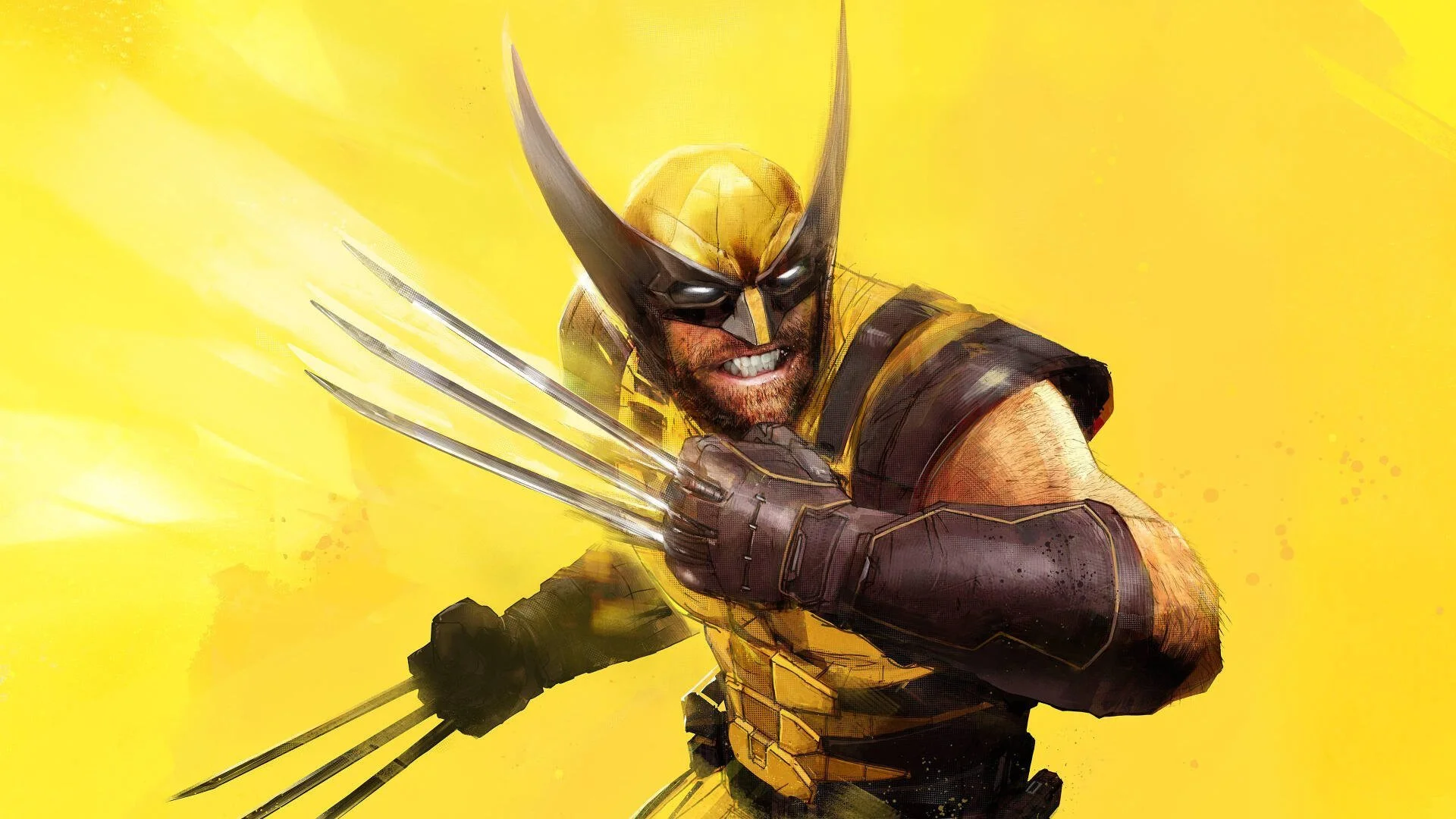
HE WAS A TWO-PAGE GUEST VILLAIN.
Wolverine — one cameo, one cover, and nineteen different editions of the same comic · Comic King
Wolverine — The Complete Comic King Guide
In 1974 Marvel needed someone to fight the Hulk for an issue, so Len Wein and Herb Trimpe invented a short, bad-tempered Canadian government agent with claws. He turned up on the last page of one comic, had his fight in the next, and there was no plan for him after that. Fifty-two years later he is one of the most valuable first appearances in comics and one of the most heavily published characters in the industry — and the comic he properly debuts in exists in nineteen different editions, several of which look almost identical to the original. That combination, enormous value plus enormous confusion, makes Wolverine the single most careful conversation we have at the counter. Comic King carries him in Edmonton across all of it: this week's issues, the Bronze Age keys, and the collections. If the issue you want isn't on the shelf, we can special-order or source it on request.
Quick Facts
Story: A man with an unbreakable skeleton, claws, a healing factor and no memory of where any of it came from — written as a Canadian from the very first issue.
Length: In comics since 1974, across the X-Men books, several solo series and a large number of concurrent titles today.
Status: Ongoing — volume 8 has run since 2024, alongside several other Wolverine titles at the same time.
Publisher: Marvel Comics
Age Guide: ⚠ Violent, and the best-regarded story (Weapon X) is genuinely grim body horror. Marvel's all-ages line covers him separately — ask before recommending.
Formats: New issues · back issues · graphic novels · Epic Collections · omnibus editions.
At Comic King: New issues weekly, Bronze Age keys assessed properly, and we identify the edition before we quote a number.
Two Issues, Nineteen Editions, and One Very Expensive Mistake
Here is what you actually need to know before buying or selling anything on this page. Wolverine appears twice at the very start of his existence and the two appearances are not equal. INCREDIBLE HULK #180, from October 1974, has him on the final page only — a cameo, a teaser for the next issue — and he is NOT on that cover. INCREDIBLE HULK #181, from November 1974, is his first full appearance, and he IS on that cover, fighting the Hulk. Both are keys. They are not worth the same, and sellers regularly assume #180 must be worth more because it came first. It is a real key and it is the cheaper of the two. Now the part that costs people serious money. Hulk #181 has been reproduced, reprinted and re-covered so many times that there are around NINETEEN CATALOGUED EDITIONS of it. There are Mark Jewelers inserts, which were distributed on military bases and carry their own separate premium. There are official facsimile reprints. There are Brazilian and Korean foreign editions, a Mexican foil edition, blank-cover editions, and several modern retailer exclusives. On a book that ranges from roughly seven hundred and fifty dollars to nearly eight thousand depending on grade, identifying the wrong edition is the most expensive mistake available in our Bronze Age section — and several of them read as the original at arm's length or in a photograph. We check the indicia and the cover price on every single copy, in front of you, before anybody says a number. If you are buying from anywhere else, please do the same.
The Run, Era by Era
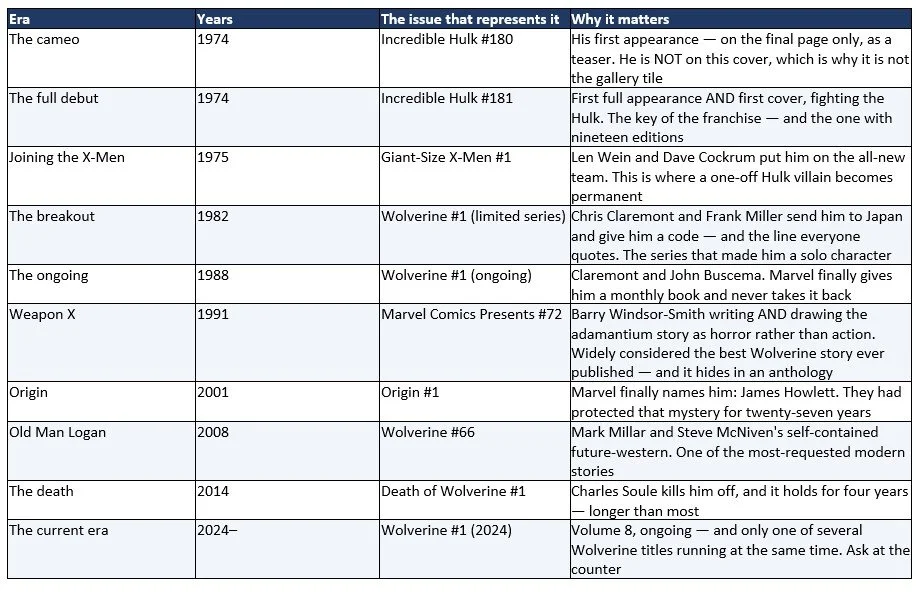
Fifty-two years, organized. Every era of Wolverine, the one issue that represents it, and why collectors care:
The Keys — Issues Everyone Hunts
Incredible Hulk #181 is the book, and everything above about editions applies to every copy of it. Incredible Hulk #180 is the cameo and a genuine key in its own right, cheaper and frequently misunderstood in both directions. Giant-Size X-Men #1 from 1975 is a major key that belongs to this page and to our X-Men page equally — it is where the all-new team is assembled and where Wolverine stops being a guest star. The 1982 limited series #1 by Claremont and Miller is the best entry key here for anyone without a Bronze Age budget: historically important, genuinely good, and affordable. Then there is the one that gets missed. WEAPON X, the story that explains how the adamantium was bonded to his skeleton, was not published in a Wolverine comic — it ran in MARVEL COMICS PRESENTS #72 to #84 in 1991, an anthology title that gets bulk-priced as nineties filler by almost everybody. We search every Marvel Comics Presents run that comes through the door, the same way we search Showcase, Tales of Suspense and Amazing Fantasy. The 1988 ongoing #1, Origin #1, the Old Man Logan issues and Death of Wolverine are all modern with substantial print runs — real keys, but valued on story reputation rather than scarcity, so grade discipline matters more than rarity. Key prices move constantly, so we buy and price against live sold comps — ask and we will pull them up on screen together.
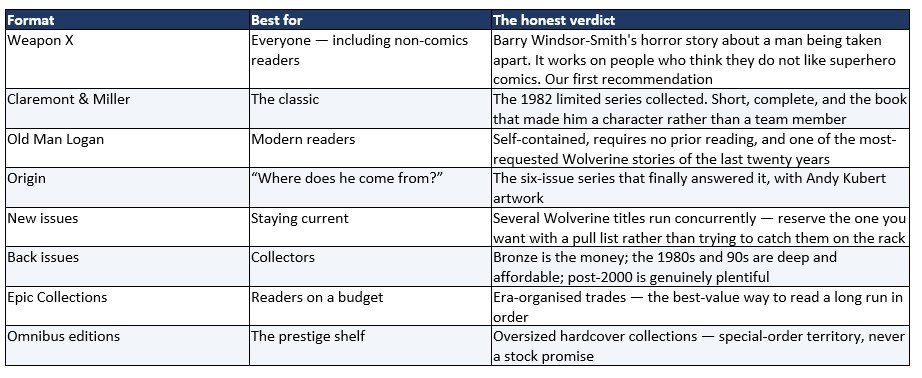
Every Format You Can Buy
Screen & Series Status
Updated August 2026: Wolverine has had more or less continuous screen presence since 2000, and one actor's association with the role is unusually strong — which keeps a permanent baseline of demand regardless of what is currently in production. The busier side right now is the comics: volume 8 continues, and Marvel has been running several other Wolverine titles alongside it simultaneously. That is worth knowing before you go looking, because “a Wolverine comic” is currently about a dozen different books. Ask us and we will point you at the right one rather than reading you a list. Exact dates for anything on screen live in the Consolidated Ordering Calendar, not on this page.
Collector's Corner — Grading, Care & We Buy
Three habits govern this character, and the first one is the reason people should bring their books to a shop rather than trusting an online listing. We identify the EDITION of every Incredible Hulk #181 before discussing money. Nineteen catalogued versions exist — Mark Jewelers military-base inserts, official facsimiles, Brazilian and Korean editions, a Mexican foil, blanks and retailer exclusives — and a photograph of the front cover cannot tell you which one you are looking at. The indicia and the cover price can. We do that check in front of you, and we will explain what we are seeing. The second habit is the #180 versus #181 conversation, which we have constantly: #180 is the cameo and is not on the cover; #181 is the first full appearance and is on the cover. Both matter, they are not equal, and we will show you live sold comps for whichever you have rather than asking you to take our word for it. The third is the anthology check — Weapon X is in Marvel Comics Presents, not in a Wolverine title, so a run of 1991 Marvel Comics Presents is worth going through issue by issue rather than pricing by the inch. Beyond those, the honest picture is that Wolverine is one of the most heavily printed characters in comics: outside the identified keys there is very little scarcity, and modern runs arrive in bulk. We will tell you that plainly rather than let you expect otherwise. We assess keys with live comps on screen, grade honestly, broker CGC submissions for slab-worthy books, and stock the bags, boards and boxes that keep a collection worth grading.
FAQ — Straight Answers
Is Wolverine's first appearance Incredible Hulk #180 or #181?
Both, in different senses, and the distinction is worth money. Incredible Hulk #180, from October 1974, contains his first appearance — but only as a cameo on the final page, as a teaser for what was coming, and he is not on that cover. Incredible Hulk #181, from November 1974, is his first full appearance, and he is on the cover of it fighting the Hulk. Collectors want both for different reasons, and the market values #181 considerably higher because a full appearance with a cover is a stronger thing to own than a single closing panel. Sellers quite often assume #180 must be the more valuable book because it came first — it is a genuine key and it is the cheaper of the two. If you have either, bring it in and we will identify it precisely and show you where it currently sits.
How do I know if my Incredible Hulk #181 is an original?
This is the most important question on this page, because there are roughly nineteen catalogued editions of that comic in circulation and several of them look near-identical to the original at a glance or in a photograph. The list includes Mark Jewelers inserts — copies distributed on military bases, which are collectable in their own right and priced differently — official facsimile reprints published by Marvel, Brazilian and Korean foreign editions, a Mexican foil edition, blank-cover editions and a number of modern retailer exclusives. The front cover alone will not tell you which you have. The indicia, on the inside, and the cover price will. Given the range of values involved — roughly several hundred dollars to several thousand depending on grade — please do not buy or sell one from a photograph. Bring it in, we will go through the indicia with you, and you will know exactly what you have either way.
Where should I start reading Wolverine?
There are currently about a dozen Wolverine titles publishing at once and fifty years of back issues behind them, so the honest answer is that it depends on one question: do you want the classic, the current run, or the famous one? For the classic, read the 1982 Claremont and Miller limited series — four issues, complete, and it is where he became a character in his own right rather than a member of a team. For the current run, ask us what is on the rack this week, because the answer genuinely changes. And for the famous one, read Weapon X by Barry Windsor-Smith — the story of how the metal was put into him, told as horror rather than action, and the book we hand to people who say they do not like superhero comics. If you want to know where he came from rather than what he does, Origin answers that. Come in and tell us which of those you are after and we will put the right book in your hands in about thirty seconds.