
THE FIRST ONE ISN'T CALLED GHOST RIDER.
Three riders, four comics and a western decoy — Johnny Blaze, Danny Ketch and Robbie Reyes, sorted out properly · Comic King
Ghost Rider — The Complete Comic King Guide
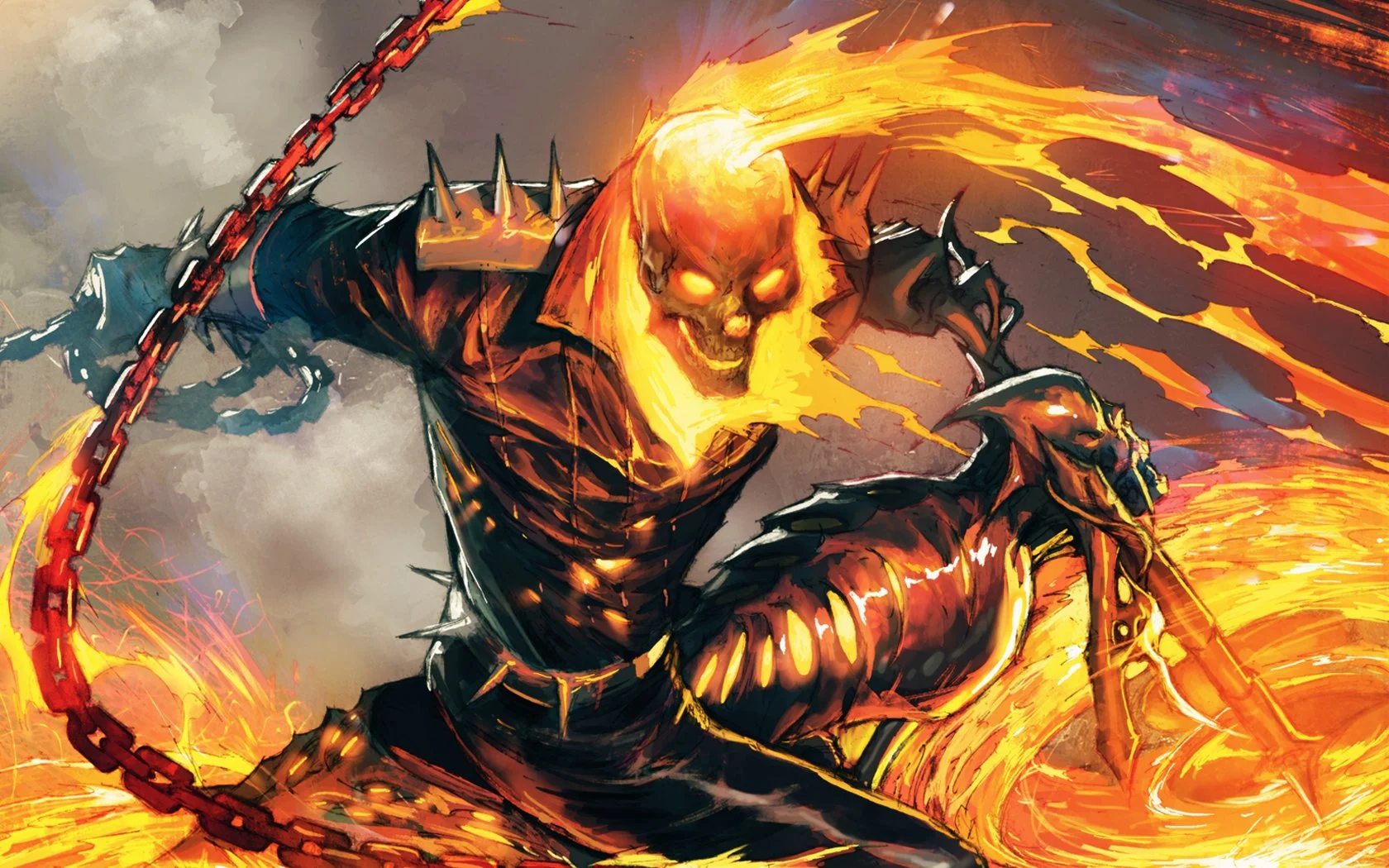
In 1971 the Comics Code stopped banning supernatural material, and Marvel spent the next few years finding out what it could get away with. What it got away with was a stunt motorcyclist who had sold himself to a demon, whose head was on fire, and whose first appearance was not in a comic called Ghost Rider. Marvel Spotlight #5, August 1972, Gary Friedrich writing and Mike Ploog drawing — the flaming skull, the chopper, and one of the most immediately recognisable images the company has ever produced. What follows is the most confusing naming situation on this entire website. There is a Ghost Rider #1 from 1967 and it is a western with a masked cowboy in it. There are three different men who have been Ghost Rider — Johnny Blaze, Danny Ketch and Robbie Reyes — and each has his own first appearance at a completely different price. "Do you have Ghost Rider #1?" is never a straight question, and answering it properly is most of what this page is for. Comic King carries Ghost Rider in Edmonton on the horror shelf where he belongs rather than buried under G in the superhero section — the Bronze Age run, the cheap and enormous 1990s run, the modern collections, and an honest identification of whatever you bring through the door. If the book you want is not on the shelf, we can special-order or source it on request.
Quick Facts
Story: A man makes a deal with something he does not understand, and it costs him control of his own body every night. The specifics change with each rider; the bargain never does.
Length: Since August 1972 — across at least nine volumes and three lead characters, none of which run continuously. Always ask which rider and which year.
Status: No ongoing series on the rack at the moment; the character publishes in revival runs. A large collected edition of the most recent run arrived in 2026, and a film has been announced for 2028.
Publisher: Marvel Comics
Age guide: ⚠ This is a HORROR book with demonic imagery, and it is not the automatic all-ages Marvel hand-off that Spider-Man or Thor is. The Bronze Age run is atmospheric rather than graphic; the modern runs are considerably more intense. We will ask before recommending one to a parent.
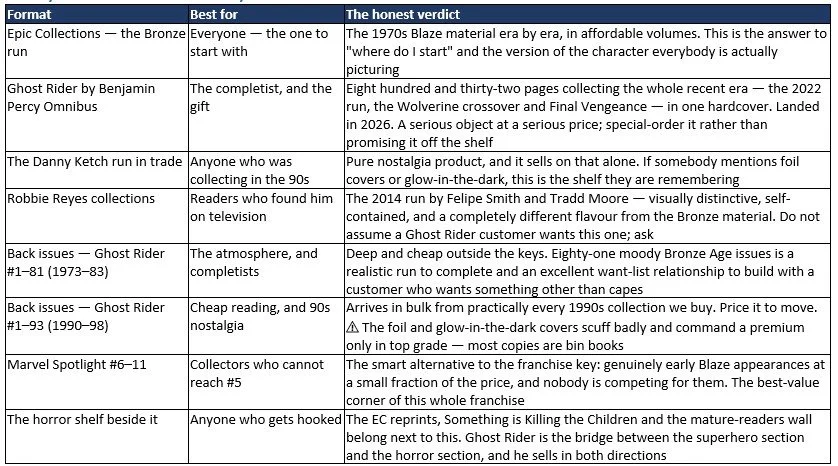
Formats: Epic Collections of the Bronze run · a large omnibus of the recent run · back issues across three characters · 1990s gimmick covers · Robbie Reyes collections.
At Comic King: Shelved with the horror books, not the capes — plus staff who will ask which rider you mean before quoting you anything.
Three Riders, and a Western That Isn't One of Them
This is the most common disappointment on our counter, so we would rather you heard it here than found out the expensive way. THE GHOST RIDER EVERYONE MEANS FIRST APPEARS IN MARVEL SPOTLIGHT #5, August 1972 — a different title entirely. Marvel Spotlight was a try-out book, the way Showcase was at DC, and Johnny Blaze ran in it through issue #11 before earning a series of his own. That means the franchise key does not file under G, which is exactly why copies still surface in collections that nobody thought to check. Now the decoy. THERE IS A GHOST RIDER #1 FROM 1967 AND IT IS A WESTERN — Carter Slade, a masked cowboy on a horse, no flames and no motorcycle, a character Marvel later renamed Phantom Rider precisely because of the confusion. People bring it in believing they have the key. Here is the part most shops get wrong when they break that news: it is still a genuine Silver Age first appearance and it is worth real money — comfortably into the low hundreds of dollars, and more in grade. It is simply not the book they were hoping for. We would rather tell someone their comic is worth a hundred dollars instead of nine hundred, kindly and with the comps on screen, than let them find out from somebody else. And then there are the three riders. JOHNNY BLAZE (1972) is the original and the motorcycle. DANNY KETCH launches a new series in 1990 and became one of the biggest sellers of the entire speculation boom. ROBBIE REYES arrives in 2014 driving a muscle car instead of a bike, and reached television. Three characters, three separate first appearances, three prices that are nothing like each other — so the first question we ask is never "what grade", it is "which rider".
The Run, Era by Era
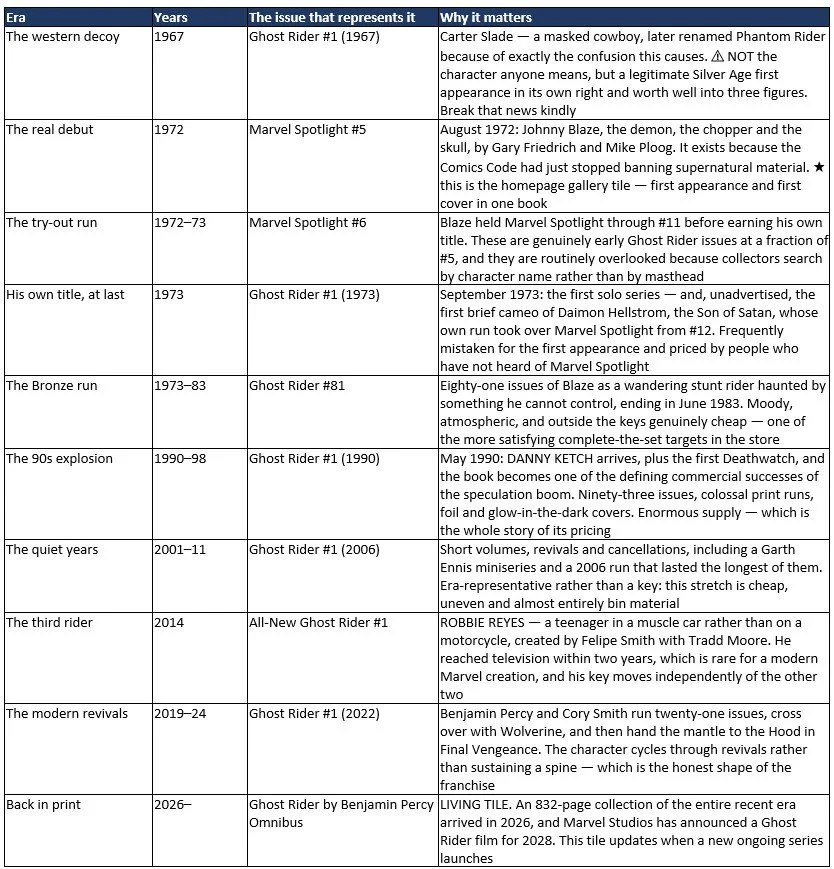
Fifty-four years, three lead characters and at least nine volumes, sorted out. Every era of Ghost Rider, the one issue that represents it, and why collectors care:
The Keys — Issues Everyone Hunts
MARVEL SPOTLIGHT #5 is the franchise key and it is a heavyweight — a four-figure book in presentable grade, close to that raw, and it sells somewhere in the world about once a day, which for a Bronze Age key is exceptional liquidity. Two things follow from that. First, we comp it individually every single time, because a book that trades daily has no excuse for a guessed price. Second, it files under MARVEL SPOTLIGHT, so every Marvel Spotlight run that comes through our door gets searched — the same discipline as Tales to Astonish for the Hulk and Tales of Suspense for Captain America. MARVEL SPOTLIGHT #6 THROUGH #11 are the affordable tier: genuinely early Ghost Rider appearances at a small fraction of #5, and consistently overlooked. GHOST RIDER #1 from 1973 is the first solo issue, a real key that also carries a first cameo of Daimon Hellstrom, and it too trades roughly daily — plenty of people buy it believing it is the first appearance, which it is not. GHOST RIDER #1 from 1990 is the first Danny Ketch and the first Deathwatch, and it is the clearest lesson in 1990s economics we can point at: raw copies cost less than a couple of new comics and trade several times a day, while a certified 9.8 runs more than ten times that. That gap is not scarcity of the comic, it is scarcity of the CONDITION — the book was printed in colossal numbers and almost nobody handled it carefully. On that run it is a high grade or it is a bin book, and we will say so plainly. ALL-NEW GHOST RIDER #1 from 2014 is the first Robbie Reyes and behaves the same way: modern print run, so the graded copies carry the value. And the 1967 GHOST RIDER #1 is the western — a legitimate Silver Age first appearance worth real money, just not the money people are expecting. Two warnings: Marvel Spotlight #5 has been reprinted, so check the indicia before any conversation about price, and oversized always means reprint. Key prices move constantly and this franchise has just had news, so we buy and price against live sold comps — ask and we will pull them up on screen together.
Every Format You Can Buy
Screen & Series Status
Updated August 2026: this is the biggest news this character has had in well over a decade. In July 2026 Marvel Studios announced a GHOST RIDER film starring RYAN GOSLING, directed by Shawn Levy, for 2028. Two things are worth knowing about it, and the second one is the interesting one. The first is that this follows two Nicolas Cage films from 2007 and 2012 and a television appearance by the Robbie Reyes version, so the character is not new to the screen — but a headline star and a 2028 date is a different order of thing from anything he has had before. The second is that MARVEL HAS NOT SAID WHICH GHOST RIDER IT IS. Asked directly, Kevin Feige declined to answer and left the reveal to Gosling. That matters here more than on almost any other page, because Johnny Blaze, Danny Ketch and Robbie Reyes each have their own separate key issue and they sit at completely different prices — so anybody telling you today which comic to buy for the film is guessing. On the comics side there is no ongoing series on the rack right now; the most recent era was collected in a large omnibus in 2026. Our position is simple and we will say it out loud: we are not going to talk anybody into a purchase on the strength of a film that is two years away and has not named its lead character yet. Exact release dates for anything upcoming live in our ordering calendar, not on this page.
Collector's Corner — Grading, Care & We Buy
Four habits govern this character at our counter. THE MARVEL SPOTLIGHT SEARCH is the one that finds money: the franchise key is not in a Ghost Rider comic, so we go through every Marvel Spotlight run that arrives and we specifically ask sellers whether they have any — most people do not connect the title to the character at all, and a #5 sitting in a run of unremarkable 1970s try-out books is a genuinely common event. THE 1967 CONVERSATION is the one that builds the relationship: when somebody arrives with the western believing they have the key, we tell them what it actually is before any money is discussed, and we tell them the good part too — it is a real Silver Age first appearance worth well into three figures. Delivering that news properly, with sold comps on the screen, is worth more to us over ten years than any single transaction. THE WHICH-RIDER QUESTION comes before every quote: Blaze from 1972, Ketch from 1990, Reyes from 2014 are three different collectibles with three different audiences, and mixing them up is how people end up with a comic they did not want. And GRADE DISCIPLINE SPLITS BY ERA HERE more sharply than anywhere else in the store. On the 1970s run, black-heavy covers on newsprint show every crease and spine tick, but mid-grade sells perfectly well on an atmospheric Bronze book. On the 1990s run the opposite is true: it was printed in enormous numbers, so the value lives almost entirely in certified high grade and everything else is honest bin stock. We grade conservatively, we broker the serious books rather than shelf-pricing them, and we say plainly when something is common — which, for most of this franchise, it is. Bring the whole box: the credibility we earn being straight about the cheap material is exactly why people call us when something from 1972 turns up.
FAQ - Straight Answers
Is Ghost Rider #1 from 1967 the first appearance?
No — and this is the single most common misunderstanding we deal with on this character, so here is the full picture. The 1967 Ghost Rider is a WESTERN comic starring Carter Slade, a masked cowboy on a horse. No flames, no motorcycle, no demon. Marvel later renamed that character Phantom Rider specifically because the overlap caused so much confusion. The Ghost Rider almost everybody means — Johnny Blaze, the flaming skull, the chopper — first appears in MARVEL SPOTLIGHT #5, cover-dated August 1972, which is a completely different comic and does not have his name on the masthead. Now the good news, because this story usually gets told badly. The 1967 comic is not worthless and it is not a fake: it is a legitimate Silver Age first appearance and it trades comfortably into the low hundreds of dollars, more in higher grades. It is simply not the four-figure book people are hoping for. Bring it in either way and we will show you the live sold results for both comics side by side, so you can see exactly what you have.
How many Ghost Riders are there, and which one is which?
Three that matter, and they are easy to tell apart once you know what you are looking at. JOHNNY BLAZE is the original — a stunt motorcyclist who made a deal with a demon, first appearing in Marvel Spotlight #5 in 1972 and getting his own title the following year. He is the one on the chopper, and he is the version most people picture. DANNY KETCH launches a brand-new series in May 1990 and became one of the biggest sellers of the entire 1990s speculation boom — if you remember foil covers or a glow-in-the-dark cover, that is this run. ROBBIE REYES arrives in 2014, drives a muscle car instead of riding a bike, and turned up on television a couple of years later. Each of the three has his own separate first appearance and they are priced nothing like each other, which is why the first thing we ask is which rider you mean rather than what grade you have. There is also the 1967 western, who is a fourth character entirely and is covered in the question above.
Where should I start reading Ghost Rider?
For most people, the Epic Collections of the 1970s run. That is Johnny Blaze as a wandering stunt rider haunted by something he cannot control, it is the version everyone has in their head, and it is inexpensive. If you want to know where the whole thing came from, Marvel Spotlight #5 is the origin — and if the original is out of reach, that story is reprinted in the collections, so you never have to buy a four-figure comic to read it. If you were collecting in the 1990s and want that specific feeling back, the Danny Ketch run is collected and the back issues are cheap enough to buy by the armful. If you found the character on television, the Robbie Reyes book is a different animal and a good one. And if you want the most recent take in a single object, the whole 2022-onward era was collected into one very large hardcover in 2026 — we can order it in. One honest warning before you start: this is a horror franchise, not a superhero one, so if you are buying for a younger reader, ask us first and we will point you at the right end of the shelf.