
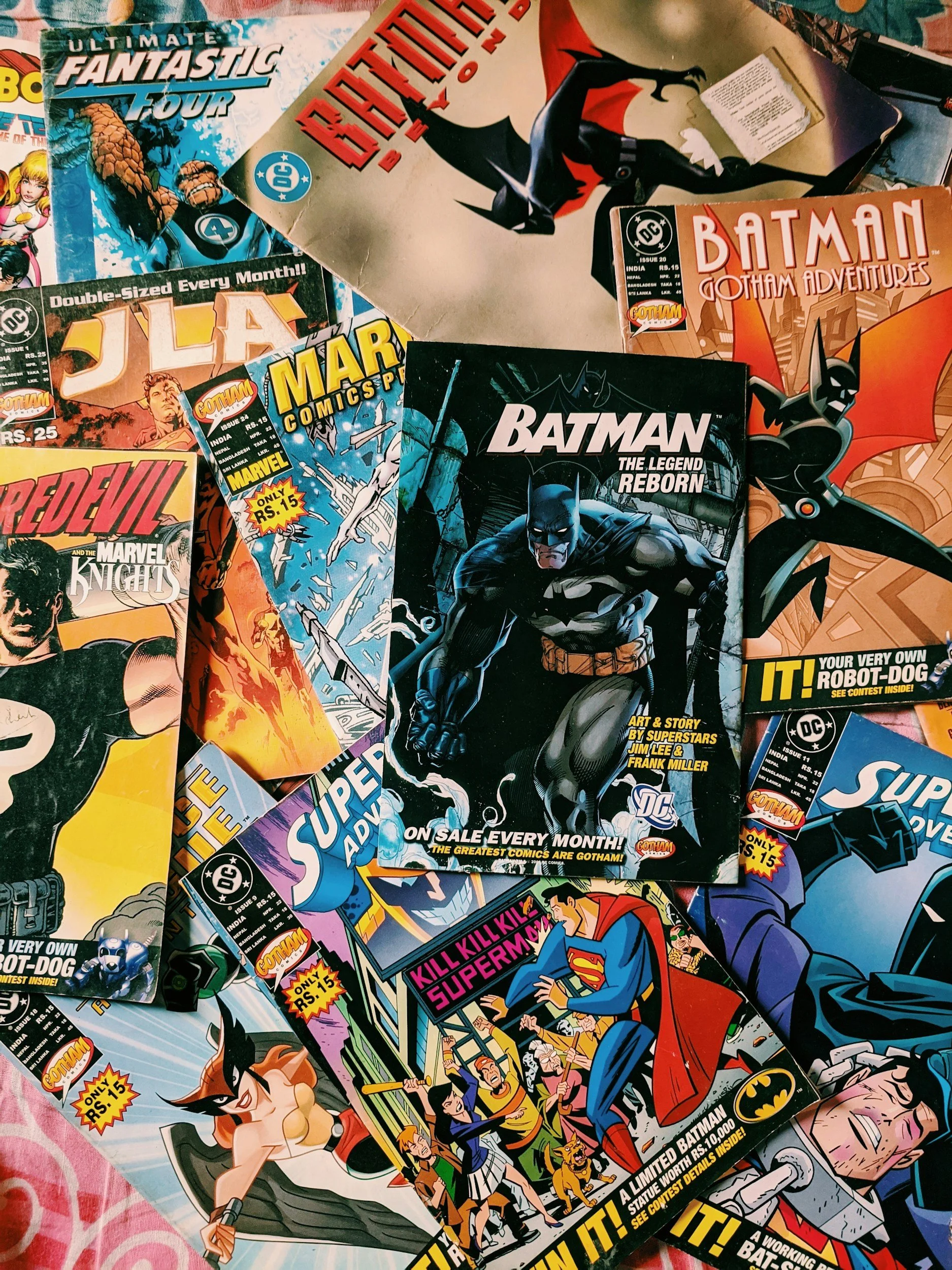
85 YEARS OF GOTHAM
Batman & Detective Comics — back issues, keys and the books that never age · Comic King
Batman Comics — The Complete Comic King Guide
Batman is the biggest franchise in comics — published without a break since 1939, across two parallel titles, with the most reliable graphic-novel shelf in the store and a back-issue market driven by the greatest rogues gallery ever drawn. This page is the whole picture: how the two series fit together, which eras matter, which issues are the keys, and where to start if you are brand new. Our Batman back issues run deep — and if the book you need is not in the vault today, our free want list does the hunting for you.
Quick Facts
Publishing Since: 1939 (Detective Comics #27) — comics' longest-running headliner.
The two series: Detective Comics (1937– ) and Batman (1940– ) — both still publishing today.
The founding grail: Detective Comics #27, Batman's first appearance — one of the two most valuable comics on earth.
The market’s engine: Villain first appearances — Batman's rogues are the buy list (see the Rogues Index below).
The evergreen shelf: Five graphic novels that outsell almost everything, year after year.
New readers start: Year One or The Long Halloween in trade — or either of today's two ongoing Batman doors.
The Two Series, Explained
Batman is the only franchise where the question “which comic is this?” has two answers. Detective Comics came first — it is the title Batman debuted IN, with issue #27 in 1939, and it kept his adventures running under its own numbering ever since (it is the “DC” in DC Comics). Batman launched in 1940 as his solo title and has run in parallel for eight decades. Both series restarted their numbering at various points and Detective later returned to its legacy count, passing the #1000 milestone — so the reliable way to identify any Bat-book is the YEAR and the creative team, never the issue number alone. Bring it in if you are unsure; decoding Bat-numbering is a service we perform daily, free, with coffee-level ceremony.
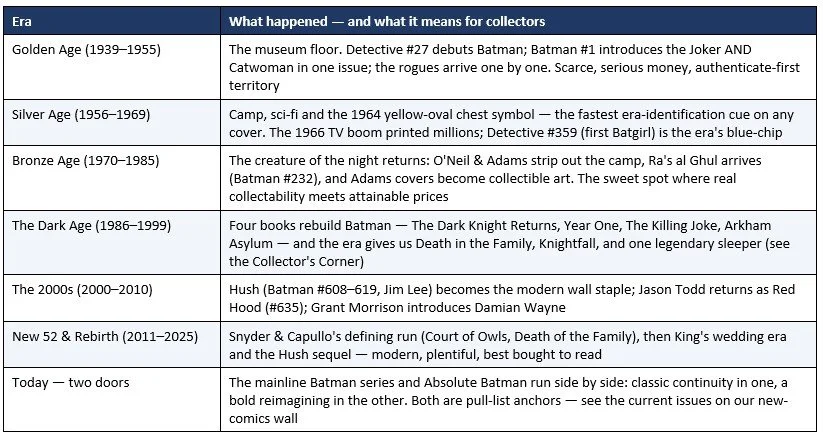
The Run, Era by Era
The Rogues Index — Batman's Key Market
Here is what makes Batman collecting different from every other franchise: the money follows the villains. No rogues gallery in comics comes close, and the first appearance of each rogue is the backbone of the back-issue market. The index every Batman collector works from:
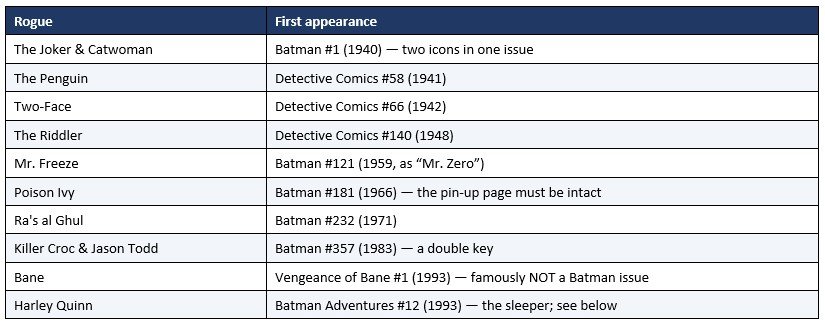
Hero-side keys matter too — Robin in Detective #38, Batgirl in #359, Damian in Batman #655–656 — and milestone books (#428, #497, Detective #1000) sell on the number. When a rogue leads a film or a series, their first appearance moves: it is the most dependable pattern in Batman collecting, and worth remembering ahead of any announced screen story.
The Five Spines — the Books That Never Age
Ask which Batman graphic novels matter and the answer has been stable for decades: Year One (the definitive beginning), The Dark Knight Returns (the definitive ending), The Killing Joke (the definitive Joker), The Long Halloween (the definitive mystery), and Hush (the modern gateway). They are the perennial best-sellers of the entire graphic-novel market — we restock them as a standing habit, and if the shelf is ever between copies, we will order yours in. Behind them sits the second shelf: Arkham Asylum, Court of Owls, A Death in the Family, White Knight, and the all-ages Wayne Family Adventures for younger readers.
Collector's Corner — Read Before You Buy or Sell
The reprint warning. Detective #27 and Batman #1 exist as 1970s oversized “Famous First Edition” reprints and as modern facsimile editions. The rule is absolute: oversized means reprint, always — and facsimiles say so in the fine print. The reprints are wonderful $10–20 collectibles; they are just not six-figure originals. A real Golden Age walk-in means authentication and consignment, never a counter quote.
The sleeper in the kids' box. Batman Adventures #12 — Harley Quinn's first comic appearance — hides in the cartoon tie-in line that most people file with children's comics. High-grade copies reach four figures. It is the single best argument for letting us look through EVERYTHING before a garage sale.
The Poison Ivy rule. Batman #181 shipped with a pin-up page; without it the book is worth a fraction. Big Silver Age keys get their pages counted before any number is quoted.
Values move — so we quote from sold prices, on screen, in front of you, the same standard on both sides of the counter. Selling a collection? The vault is stocked by what Edmonton sells us — see our We Buy Comics page. Hunting an issue? Leave a want list at the counter or through the Back Issue Vault page and you get the first call when it walks in. Books that deserve certification can be graded through our CGC submission service — and we will say so honestly when one does not.
Batman on Screen — the Standing Pattern
Batman is always in production somewhere — film, television, animation, games — and every screen event moves the same books: the Five Spines first, then the featured rogue's first appearance, then the era the story draws from. Whenever a new Batman project is announced, that is the reading of the market — and the right time to leave a want list is before the wave, not after it.
FAQ - Straight Answers
Why are there two Batman comic series?
Because Batman debuted in Detective Comics (#27, 1939) before earning his solo title, Batman, in 1940 — and both kept running, in parallel, ever since. They are separate series with separate numbering, and both have restarted or changed numbering over the decades. The reliable way to identify any issue is the year and creative team, not the number — bring it in and we will place it for you.
What is the most valuable Batman comic?
Detective Comics #27, Batman's 1939 first appearance — one of the two most valuable comics in existence, trading in the seven figures in top grade. Behind it sit Batman #1 (first Joker and Catwoman) and the major rogue first appearances. One caution: #27 and Batman #1 were reprinted as oversized editions and modern facsimiles, so authentication comes before any conversation about value.
Where should I start reading Batman?
In trade: Year One for the beginning, then The Long Halloween — the two most recommended entry points ever published, and neither has aged. If you want ongoing comics instead, today's mainline Batman series and Absolute Batman are both built for new readers; add either to a pull list and you will never miss an issue.